Figure 22-2 · Chapter 22
The Emotional Precision Model
Precision as the counterweight to velocity — saying the exact right amount.
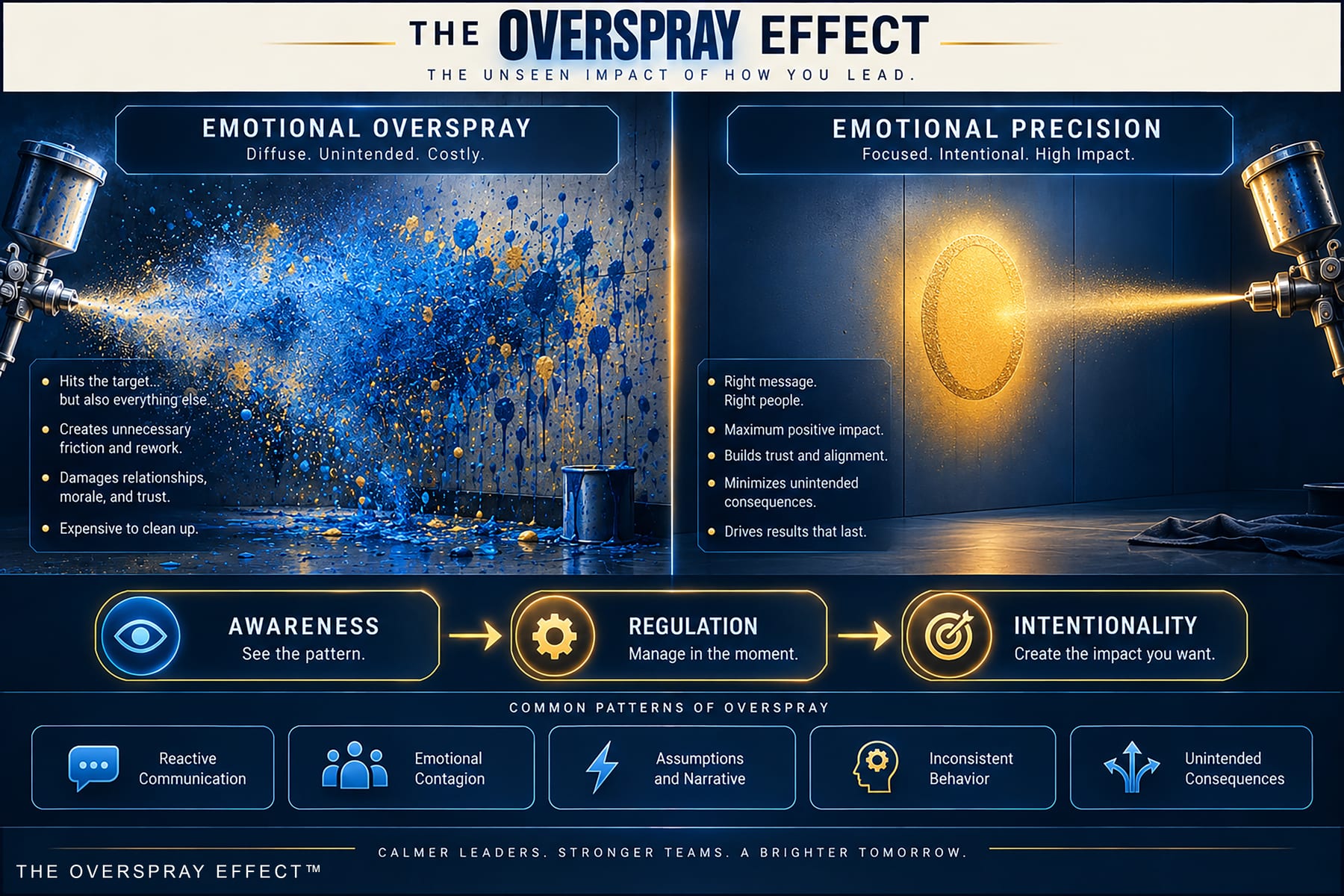
Precision is about accuracy, not restraint — whether what you actually express matches what you actually intend. Emotional overspray is diffuse and unintended; emotional precision is focused and on-purpose. The difference isn't how much a leader feels. It's how cleanly that feeling gets translated into what the room actually receives.
How it works
Awareness is knowing what you're actually feeling before it leaks out sideways — the starting condition precision depends on. Regulation is holding that feeling long enough to choose its expression rather than letting it fire automatically. Intentionality is the deliberate choice of exactly how much of it to show, and how, matched to what the moment actually needs. Run cleanly, the three stages produce precision: a focused, intentional signal with high impact and no wasted charge. Skipped or rushed, the same underlying emotion becomes overspray instead — showing up as reactive communication, emotional contagion spreading unintentionally to the room, people filling in assumptions and narrative because the signal wasn't clear, inconsistent behavior from one moment to the next, and consequences nobody meant to cause.
In practice
Two leaders are both genuinely frustrated about the same missed deadline. One reacts immediately and broadly — sharp tone in the group channel, visible all day, read by half the team as anger at everyone. The other takes the same frustration through Awareness, Regulation, and Intentionality, and delivers one precise, private conversation with the person actually responsible. Same emotion. One got sprayed across the whole team; the other got applied exactly where it needed to go.
Something to sit with
Think of the last time you were genuinely frustrated at work. Did the frustration land precisely on what it was actually about — or did it spray wider than the situation called for?