Figure 22-1 · Chapter 22
The Emotional Velocity Model
How fast an emotional state travels from a leader to everyone around them.
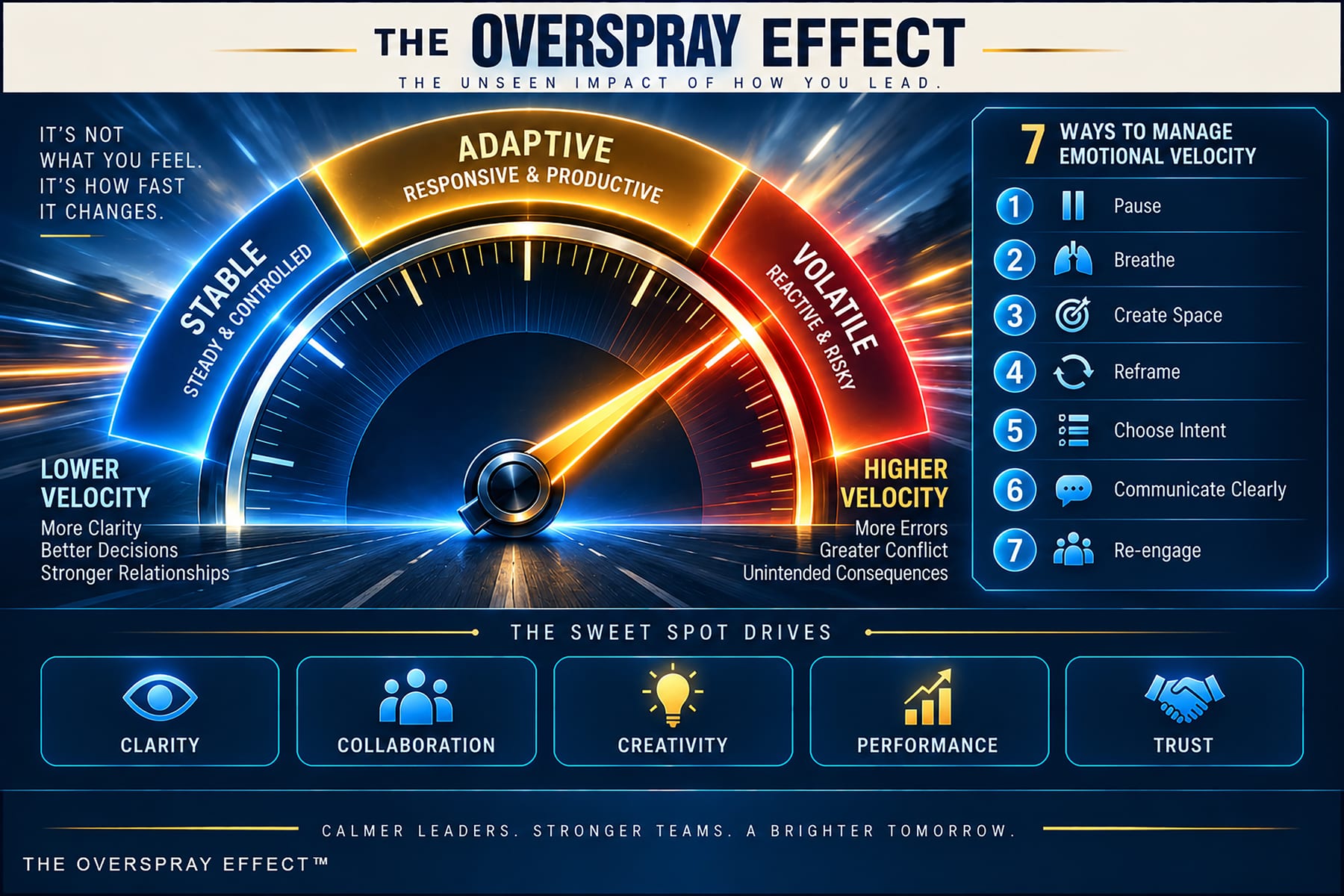
Velocity is about speed, not sentiment — how abruptly a leader's internal state shifts, regardless of which direction it shifts in. A sudden swing from calm to sharp produces whiplash whether the underlying emotion is 'bad' or not; teams brace against the suddenness itself, independent of what caused it.
How it works
The model runs on a single gauge from Stable through Adaptive to Volatile. Stable is steady and controlled — low velocity, predictable shifts, if any. Adaptive is the productive middle: responsive to real changes in the moment without overcorrecting. Volatile is the danger zone — reactive, abrupt swings that leave people guessing which version of the leader they're about to get. Managing velocity comes down to a short list of concrete moves: pause before responding, breathe, create literal space before reacting, reframe the trigger, choose your intent deliberately rather than defaulting to the fastest reaction, communicate clearly instead of letting the shift speak for itself, and re-engage once you've actually recalibrated. Running near the Adaptive sweet spot is what produces clarity, collaboration, creativity, performance, and trust — all of which erode fast whenever velocity spikes into Volatile territory.
In practice
A usually even-keeled director gets blindsided by bad news mid-meeting and snaps into a noticeably harder tone within seconds — a sharp jump from Stable straight to Volatile. The content of what he said afterward was reasonable. What the room actually remembers is the speed of the shift, and for the next few meetings, people visibly brace the moment he opens his mouth, waiting to see which version shows up.
Something to sit with
Think of your fastest recent emotional shift — not your biggest one, your fastest. What triggered the speed of it, and did the team get any warning before it landed?