Figure 24-1 · Chapter 24
The Emotional Temperature Model
Reading — and setting — the emotional temperature of a room on purpose.
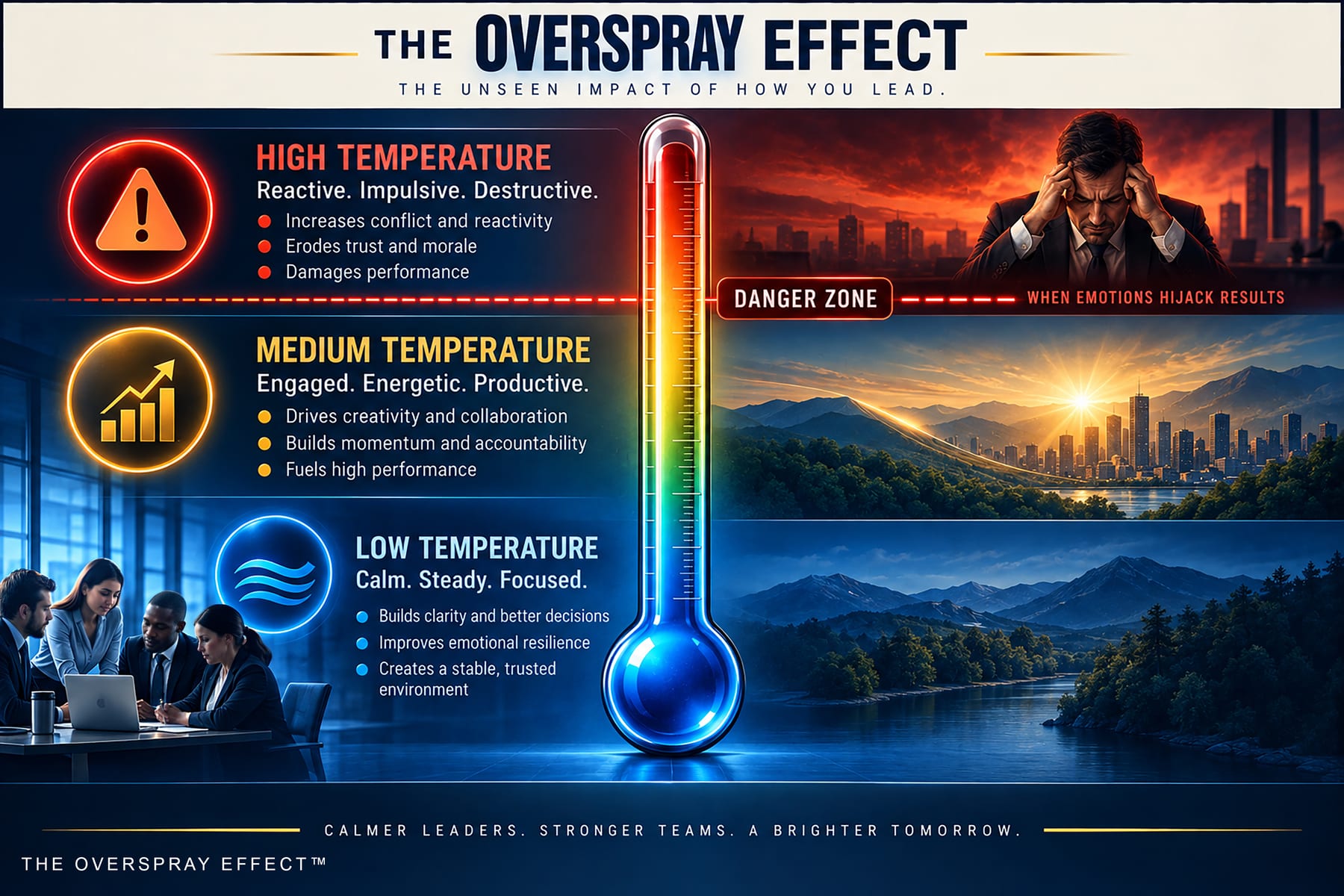
Every room a leader enters has a temperature, and the leader is usually the one setting it — whether or not they're doing it on purpose. People don't feel your actual temperature. They feel a magnified version of it. A little urgency from you reads as real pressure to them.
How it works
Low Temperature is calm, steady, and focused — a room that feels safe to think clearly in. Medium Temperature is productive heat: engaged, energetic, motivated, the right amount of urgency to get things moving without anyone bracing. High Temperature is the danger zone — reactive, impulsive, destructive — the point where emotion starts actively working against the result instead of toward it. Temperature isn't one input; it's a composite of tone, pace, intensity, presence, energy, stress level, whatever residue is still hanging around from the last interaction, and how much of it the leader is actually containing versus leaking. Because the team experiences a magnified version of whatever temperature a leader is actually running, a leader who feels like they're at a 6 is often read by the room as closer to an 8 — which makes deliberately running a little cooler than feels natural one of the most reliable ways to keep a room in the productive zone instead of tipping it hot.
In practice
A team walks into a status meeting already running warm from a tense morning. The leader, feeling only mildly impatient herself, speaks slightly faster and a little more sharply than usual. The room reads it as significantly hotter than she intended, and two people leave the meeting more rattled than the actual content warranted. She felt a 5. They experienced an 8.
Something to sit with
On a scale from Low to High, what temperature do you think you're actually running in your next meeting — and what temperature is the room likely to feel instead?