Figure 25-1 · Chapter 25
The Emotional Architecture Model
The load-bearing structure underneath a leader's emotional patterns.
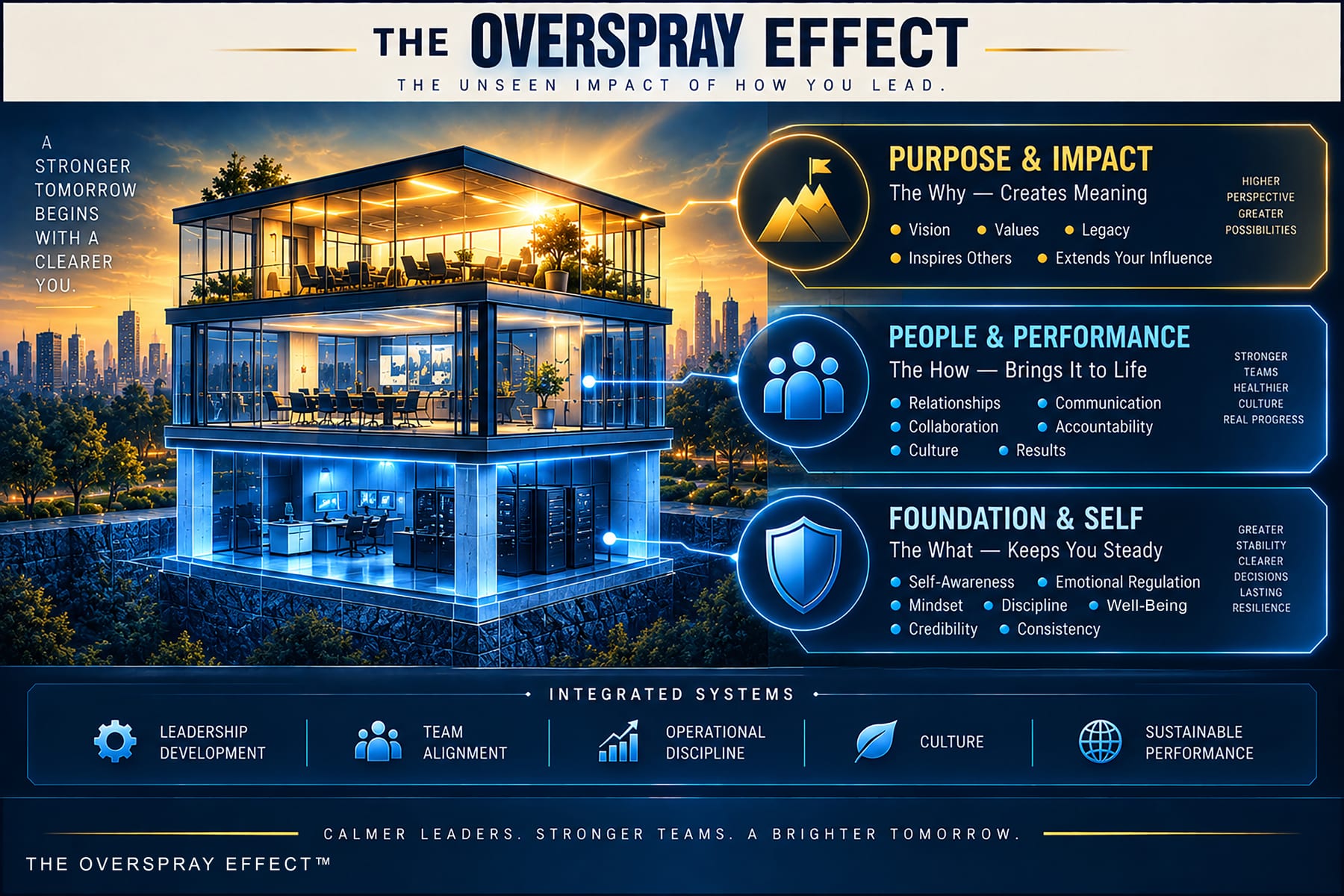
Everything this book has covered — awareness, regulation, containment, precision, consistency, presence — isn't a set of separate skills. It's one structure, built in layers, the way a building is: a foundation that keeps you steady, a layer of how that steadiness gets applied to people and work, and a top layer of purpose that gives the whole thing a reason to stand.
How it works
Foundation & Self is the base layer — self-awareness, emotional regulation, mindset, discipline, well-being, credibility, consistency — the part of the structure nobody sees directly but that everything above it depends on. People & Performance is the middle layer, where that foundation actually gets applied: relationships, communication, collaboration, accountability, the results and culture that come from how well the foundation is holding. Purpose & Impact is the top layer — vision, values, legacy, the influence that extends past any single interaction and inspires people beyond what the leader directly controls. A crack in the foundation doesn't stay contained to the bottom floor; it travels upward, showing up eventually as inconsistent people-work and a purpose that rings hollow, no matter how good the vision statement sounds.
In practice
A leader with a genuinely compelling vision for the team (strong top layer) but shaky self-regulation under pressure (cracked foundation) finds that the vision keeps failing to stick — not because it's a bad vision, but because the inconsistency underneath it quietly undercuts every attempt to build toward it. People stop trusting the purpose once they've seen the foundation wobble enough times, no matter how many times the vision gets restated in the next all-hands.
Something to sit with
If your leadership is a three-story structure, which floor would you actually want inspected first — the foundation, the people-and-performance layer, or the purpose at the top?