Figure 14-1 · Chapter 14
The Emotional Footprint Layers
The layers a leader's emotional footprint leaves behind, long after the moment passes.
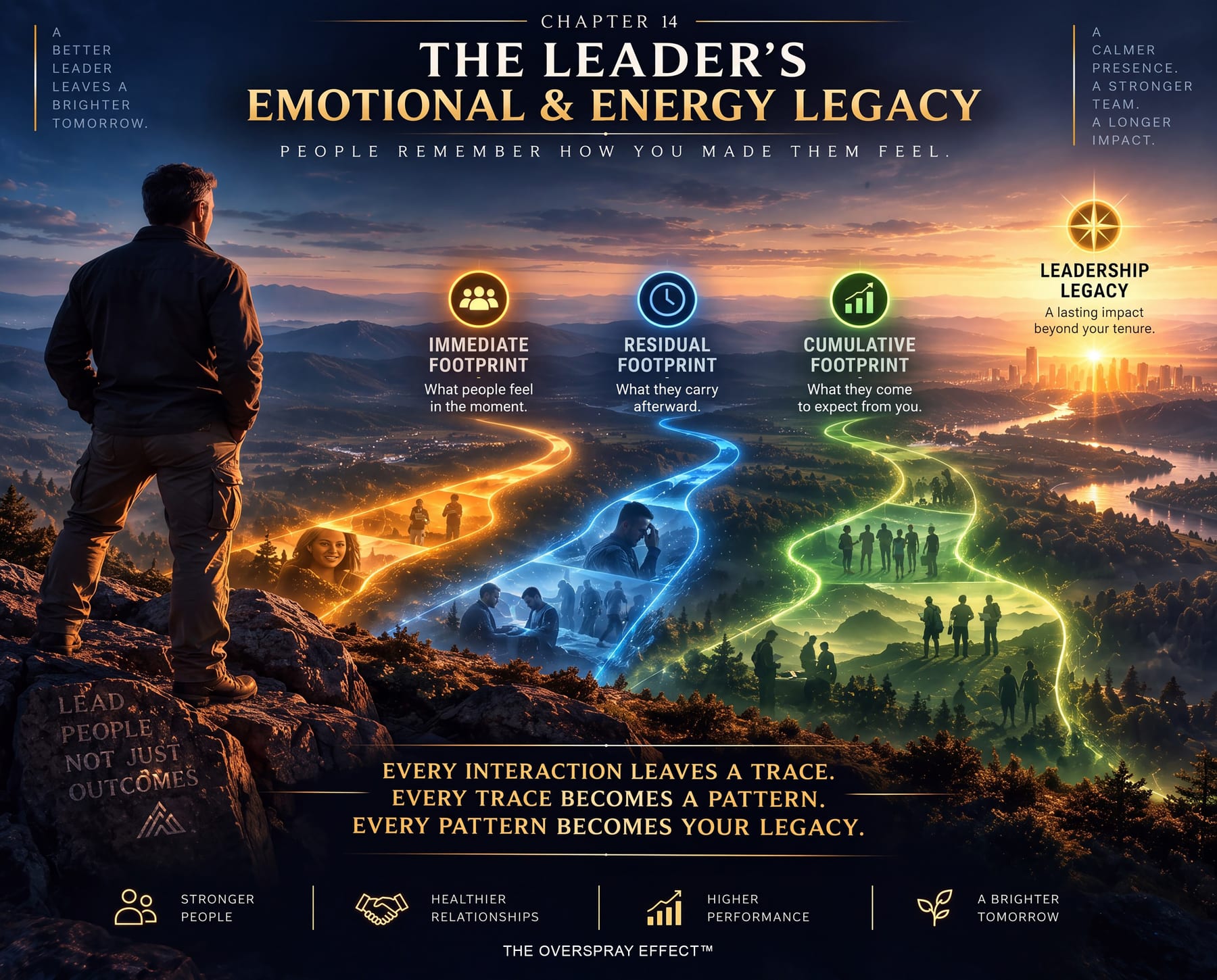
Every interaction leaves a footprint on three different timelines at once — how it feels in the moment, what gets replayed afterward, and what it quietly trains people to expect from you going forward. Enough of those footprints, stacked over enough time, become something people will remember about you long after you've left the role.
How it works
The Immediate Footprint is what people feel in the moment itself — the instant emotional reaction to your tone, timing, and presence. The Residual Footprint is what they carry afterward — the replay that runs in their head for the rest of the day, sometimes longer, independent of whether you've moved on. The Cumulative Footprint is what enough repeated immediate-and-residual moments add up to: what people come to expect from you by default, before you've even opened your mouth in a given interaction. And Leadership Legacy is the furthest layer out — the lasting impression that outlives your actual tenure, the thing people still say about you after you're gone. Each layer is built from the one before it; there's no shortcut to a good legacy that skips managing the immediate moment first.
In practice
A department head is known, years after leaving, as 'the one who always asked how you were doing before the status update.' That reputation wasn't a deliberate branding choice — it was hundreds of small Immediate Footprints (a genuine two-second pause before business) compounding into a Cumulative Footprint, and eventually into a Legacy that outlasted the job itself. Nobody on that team could point to a single meeting where it was decided; it was never one moment, just the same small footprint, repeated until it became the expectation.
Something to sit with
If someone described your Leadership Legacy honestly right now, based only on your last month of Immediate Footprints — not your intentions — what would they actually say?