Figure 15-1 · Chapter 15
The Psychological Safety Model
What psychological safety is actually built from — and what erodes it.
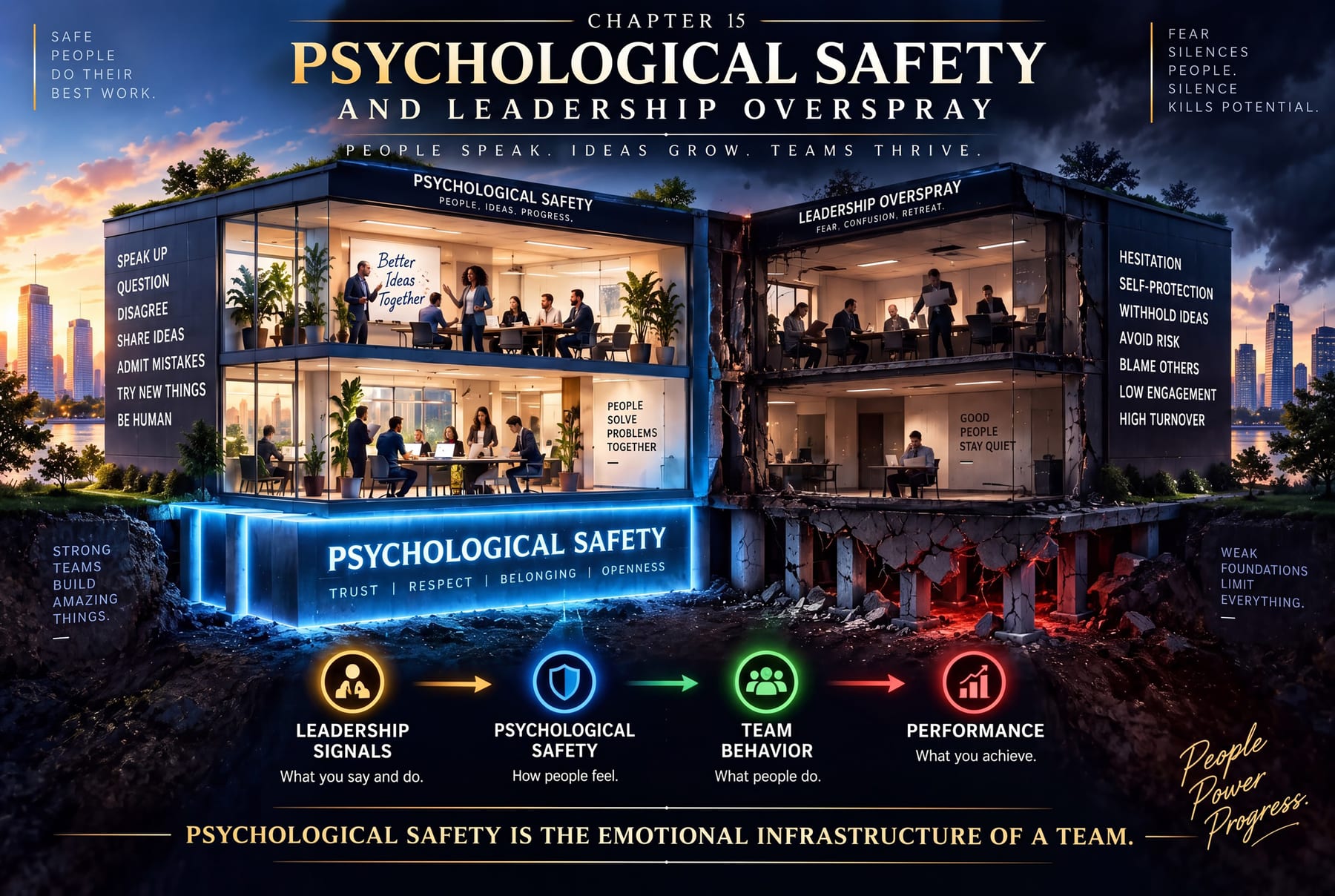
Psychological safety isn't a values poster or a policy — it's a direct, mechanical output of how predictable and clear a leader's signals actually are. When the signals are steady, people take more interpersonal risk: they speak up, question, disagree, admit mistakes. When they're not, the exact same team quietly switches to self-protection — and the switch usually happens long before anyone names what changed.
How it works
Leadership Signals are what a leader actually says and does, moment to moment — the raw input. Psychological Safety is how people feel in response to the accumulated pattern of those signals, built on a foundation of trust, respect, belonging, and openness. Team Behavior is what people do as a direct result of that feeling: in a safe climate, they speak up, ask questions, challenge ideas, and own mistakes early; in an eroded one, the same people hesitate, self-protect, withhold ideas, and quietly avoid risk. Performance is the measurable outcome of which behavior set a team is actually running on — and it shows up in the numbers well before it shows up in an engagement survey.
In practice
Two teams get the same ambiguous, high-pressure project. One team's leader has spent months sending consistent, clear signals — that team surfaces a major risk in week one, before it's expensive to fix. The other team's leader has been unpredictable under pressure — that team sees the same risk just as early, says nothing, and the project absorbs the cost in week six instead. Same people, same problem, different signal history.
Something to sit with
If someone on your team spotted a real problem with your plan right now, how confident are you they'd actually tell you — and what in your last month of signals would they be basing that confidence on?