Figure 21-1 · Chapter 21
The Blind Spot Model
Where a leader's self-view and a team's experience stop lining up.
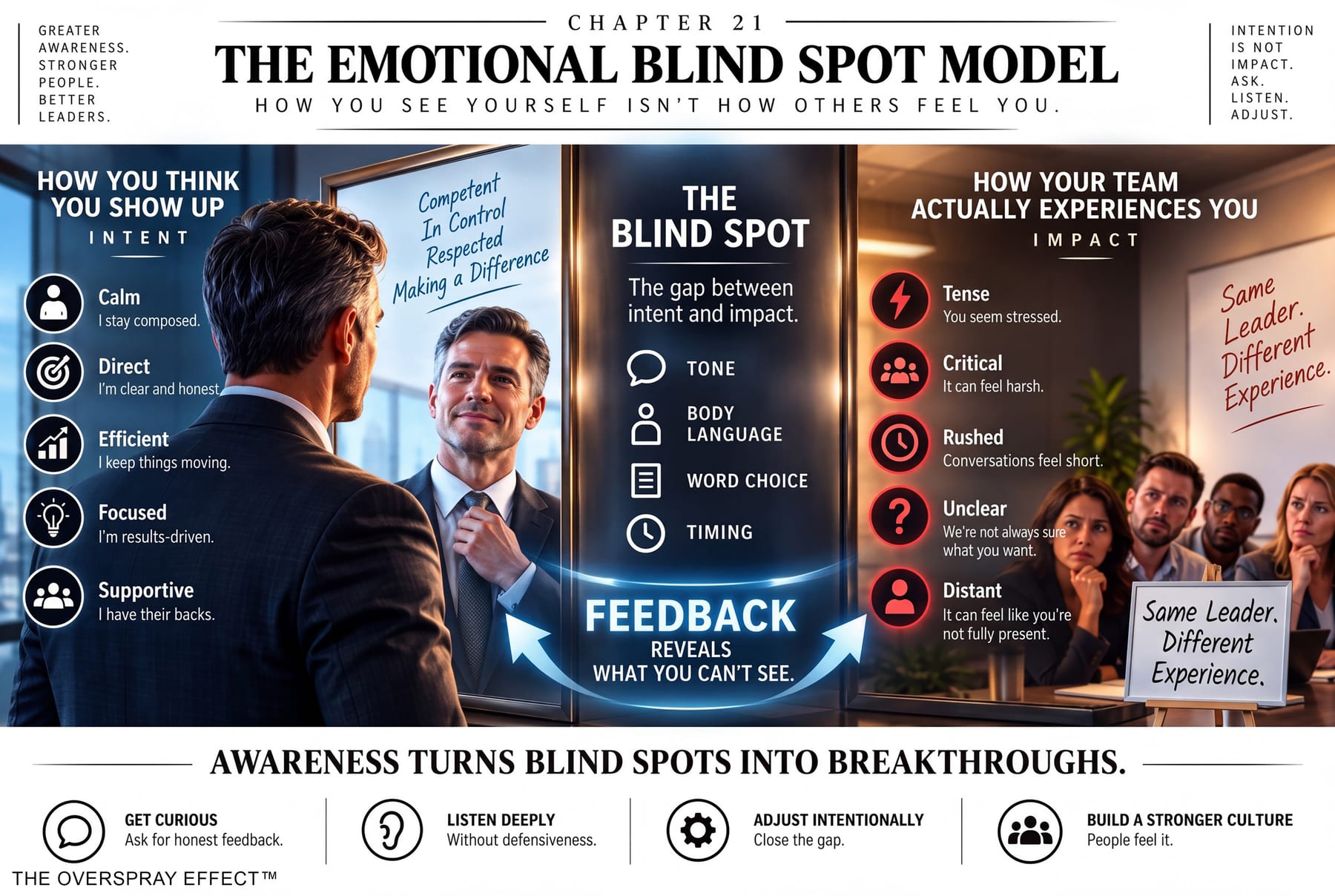
Leaders can't reliably see their own emotional output — not because they're careless, but because of a structural gap between what they intend and what actually lands. The gap is invisible to the leader by definition and obvious to everyone else in the room. Closing it takes outside feedback. Introspection alone can't reach a blind spot.
How it works
Intent is how a leader believes they're showing up — calm, direct, efficient, focused, supportive, the version they'd describe if asked. Impact is how the team actually experiences that same behavior — tense, critical, rushed, unclear, distant — not because the leader is lying to themselves, but because tone, body language, word choice, and timing carry information the leader doesn't consciously send or receive. The Blind Spot is the gap between those two columns, and it's genuinely invisible from the inside; a leader checking their own intent will always find it reasonable, because intent is the only half of the equation they have direct access to. Feedback is the only thing that reveals what's actually on the other side — someone has to report back what landed, because the leader structurally cannot observe it themselves.
In practice
A senior leader believes he runs efficient, focused meetings — his intent column reads exactly that way. His team experiences those same meetings as rushed and unclear, routinely leaving without knowing what was actually decided. He's never been told this, because the more senior someone becomes, the fewer people volunteer that kind of feedback unprompted. The gap has been running, unseen, for over a year.
Something to sit with
If you asked three people on your team to describe your Impact honestly, with no risk to them for being candid, how different do you think their column would look from your own Intent — and when's the last time you actually asked?