Figure 8-1 · Chapter 8
The Overspray Cost Model
Where unmanaged influence actually shows up on the ledger.
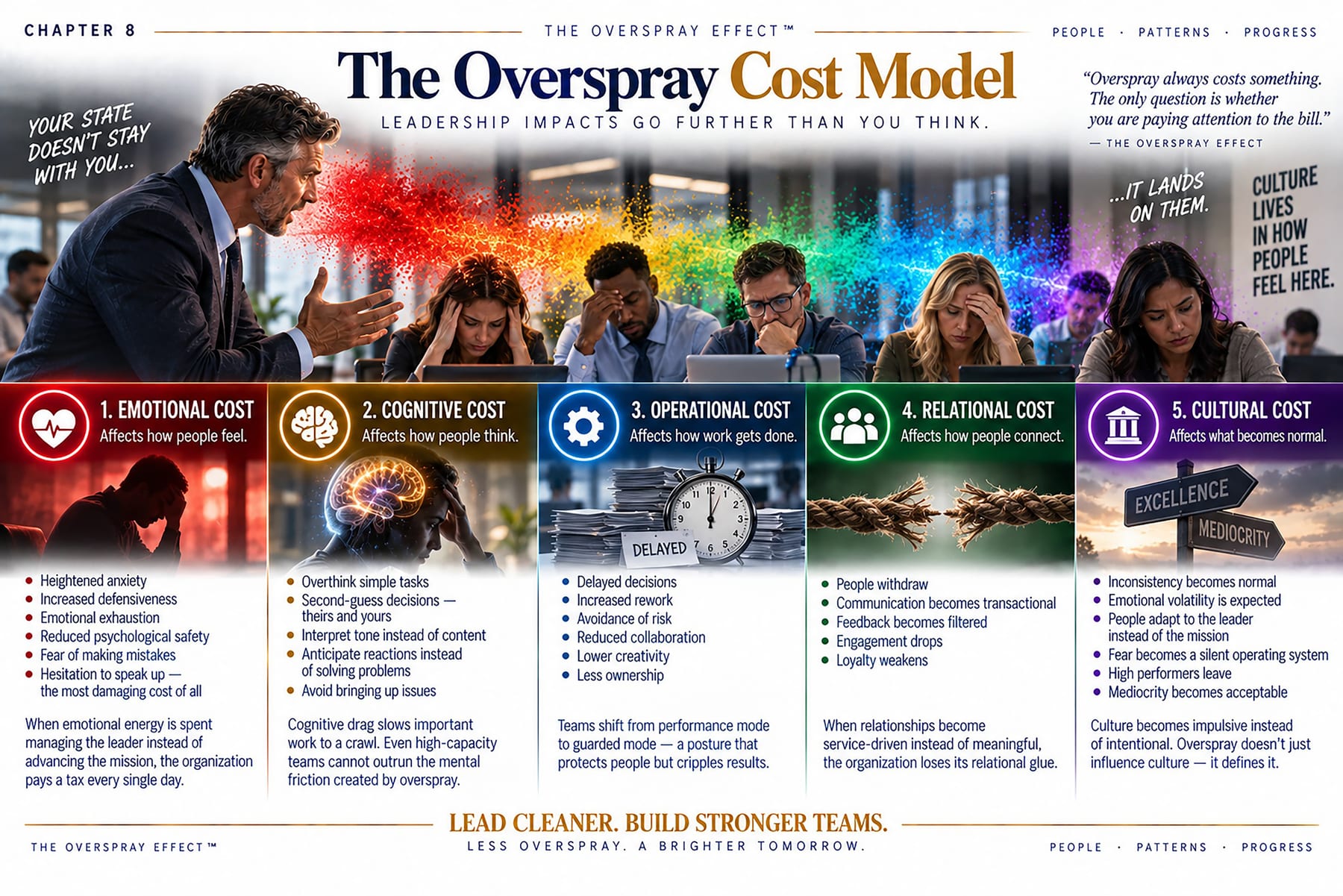
Uncontrolled overspray isn't a personality quirk — it's a bill the organization pays in five currencies at once: emotional, cognitive, operational, relational, and cultural. Each cost is slow, distributed, and easy to miss on its own, which is exactly why the total so often surprises leaders whose dashboards looked perfectly fine right up until someone resigned.
How it works
The model breaks the bill into five categories, and each one compounds quietly on its own timeline. Emotional cost shows up as rising anxiety, defensiveness, and silence, as people spend energy managing the leader's mood instead of doing the work in front of them. Cognitive cost appears when teams start overthinking routine tasks, second-guessing decisions they'd normally make instantly, and decoding tone instead of solving problems — mental bandwidth that should go to the job instead goes to managing the leader. Operational cost is the most visible layer: delayed decisions, avoidable rework, teams choosing the safe option over the better one. Relational cost is quieter and more corrosive — feedback gets filtered before it reaches you, honest pushback disappears, and engagement drops well before anyone announces they're leaving. And cultural cost is the long game: inconsistency becomes the new normal, people start adapting to the leader's patterns instead of the team's actual mission, and the strongest performers — the ones with the most options — are usually the first to quietly go.
In practice
A team hits every deadline on paper, so its director assumes things are healthy. Underneath, meetings run long because people over-explain simple updates, feedback has gone generic and safe instead of specific and honest, and two strong performers have quietly started interviewing elsewhere without saying a word. The dashboard looks fine. The five-category cost — paid daily, in ways no single metric captures on its own — tells a very different story to anyone who knows to look for it.
Something to sit with
If you had to guess which of the five costs — emotional, cognitive, operational, relational, or cultural — your team is quietly paying most right now, which would it be, and how would you actually know if you're wrong?